Water Damage Restoration · Austin, TX
Water Damage Restoration in Austin
Emergency water extraction is the first phase of a larger restoration scope that can include moisture mapping, structural drying, contamination control, selective removal, repairs, and claim records.
Water extraction, water removal, mitigation, drying, and water damage repair are stages within the homepage service. The source, contamination category, materials, and moisture readings determine the sequence.
Request water damage contact
Describe the property issue. An independent local provider may contact you after the request is reviewed.
What to do before provider contact
Four things that protect your home and your insurance claim in Austin.
- Stop the source if you safely can (supply valve, appliance shut-off)
- Kill power to affected rooms at the breaker — never stand in water near outlets
- Photograph everything before you move it — your claim depends on it
- Don't run household fans on sewage or gray water — it spreads contamination
Emergency Water Extraction in Austin, TX
Extraction removes standing water, but the property is not dry until affected materials are mapped, monitored, and measured against a documented endpoint.
Extract and classify the water
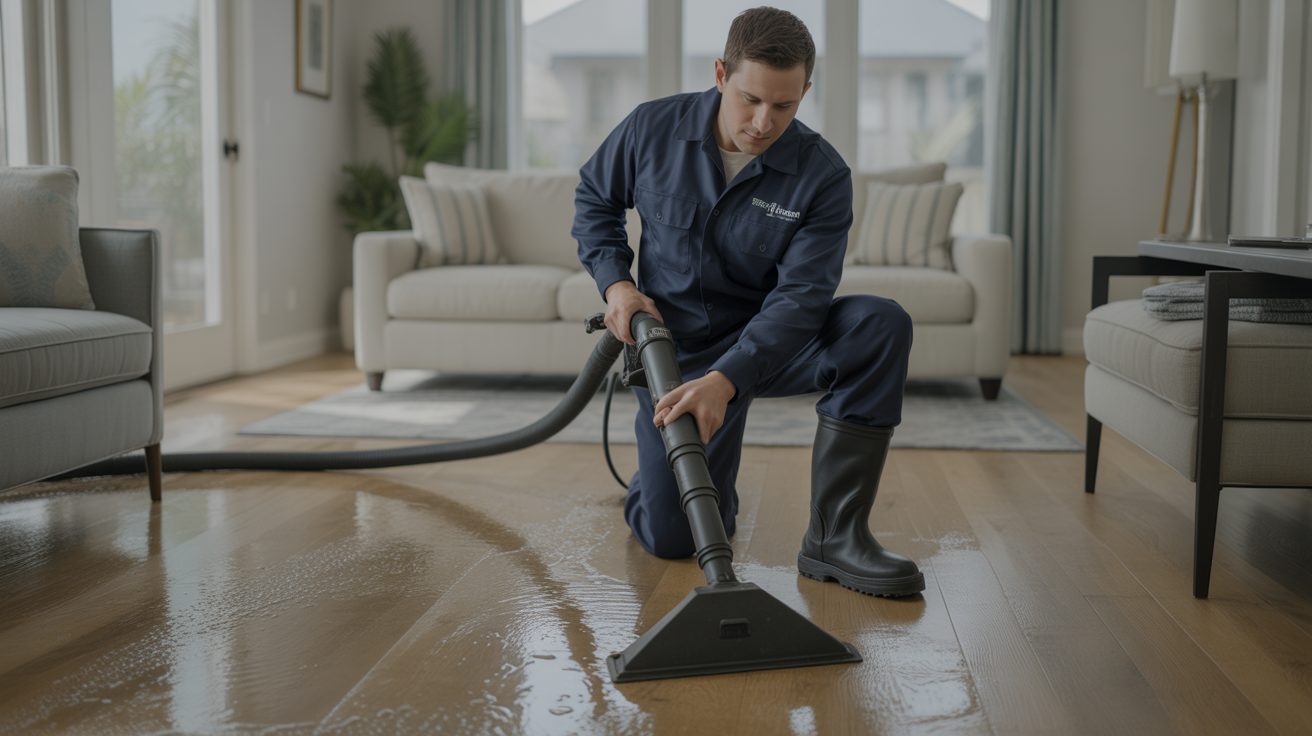
Stop the source when safe, record the affected rooms, identify clean, gray, or sewage contaminated water, and select extraction equipment that fits the flooring, cavities, contents, and access.
Map the moisture before drying
Use noninvasive and penetrating meters where appropriate, thermal imaging as a screening tool, and documented reference points. Drying equipment should follow the mapped materials, not a generic room count.
Verify the dry standard and keep records
Record equipment placement, environmental readings, material moisture, removed materials, daily changes, photos, and the endpoint used before repairs. Those records also support insurance review without promising coverage.
Ask the provider to separate extraction, sanitation, drying, demolition, contents handling, repairs, equipment days, monitoring, exclusions, and closeout records in the written scope.
How the process works
A written service scope should separate and document each stage.
Request & review
The request should capture the source, water category, affected materials, electrical hazards, occupants, and access before provider timing is confirmed.
Assess & stop the damage
Moisture mapping, category assessment (clean, gray, or black water), and immediate extraction.
Dry & monitor
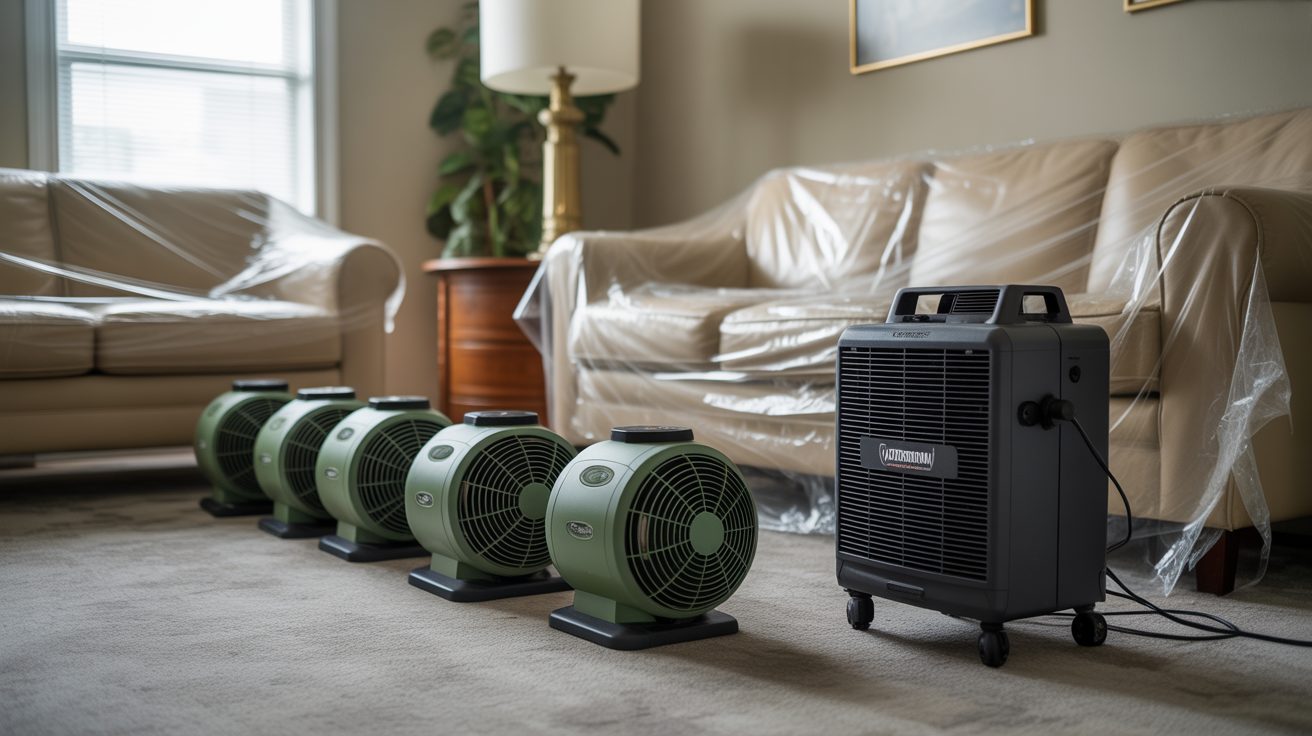
Commercial dehumidifiers and air movers, with daily moisture readings until structure is verified dry.
Document & restore
Full photo log and drying records for your insurance carrier, then repairs back to pre-loss condition.
Clean, gray, or black: the water category decides everything
IICRC S500 classifies every loss by contamination level — category drives what can be saved, the drying plan, and the claim.
| Category | Typical source | What it means for your home |
|---|---|---|
| Category 1 — clean water | Supply lines, faucets, rainwater | Fast extraction; most materials dry in place |
| Category 2 — gray water | Washing machines, dishwashers, tub overflow | Extraction plus antimicrobial treatment; some removal |
| Category 3 — black water | Sewage backup, rising floodwater | Containment, porous materials removed, full sanitation |
Ask the provider how the scope aligns with current professional water damage restoration standards and how drying records will be delivered.
What water damage costs in Austin
Planning ranges are not bids. Ask the provider for a written, itemized scope before authorizing work.
| Scope factor | What to confirm in writing |
|---|---|
| Damage and affected materials | Areas, quantities, and work limits |
| Equipment and monitoring | Units, days, readings, and completion standard |
| Repairs and exclusions | What is included, excluded, and subject to change |
Service scope options
Water Damage Restoration
Standing water requires a scope covering extraction, moisture mapping, drying, contamination controls, and closeout records.
Mold Remediation
Musty odor, visible growth, or a failed inspection requires a scope covering moisture control, containment, removal, and appropriate verification.
Fire Damage Restoration
After the fire trucks leave, the clock starts. Board-up, smoke and soot removal, and a documented path back to…
Will insurance cover it?
The three answers that matter for water damage claims in Texas.
Usually covered
Sudden, accidental events — burst pipes, appliance failures, fire and smoke damage, and mold caused directly by a covered water event.
Usually excluded
Gradual leaks, deferred maintenance, and rising floodwater — outside flooding needs separate NFIP flood coverage.
Records that support review
Photo logs, moisture readings, and itemized scopes support review. Ask the provider to build that record from the first visit.
Built for Austin
Flash floods off the creeks, slab leaks in limestone soil, and burst pipes in rare hard freezes — Central Texas water damage comes in bursts, and hours matter.
Requests may be submitted for properties in Austin and the surrounding communities of Round Rock, Pflugerville, Cedar Park, Leander, Buda and Kyle.

Common questions
InsuranceDoes homeowners insurance cover water damage?
Coverage depends on the cause and policy. Document the damage, contact the insurer, and request a detailed provider scope; no contractor can guarantee a claim outcome.
TimelineHow fast do you need to dry a home?
Timing depends on scope, access, materials, readings, permits, and repairs. The provider should confirm the schedule and completion criteria in writing.
ProcessDo I need to move out?
Occupancy depends on contamination, electrical hazards, access, noise, equipment, and the written safety plan. Ask the provider which areas must remain vacant.
CostWhat does an inspection cost?
Price depends on the documented scope, affected materials, access, equipment, monitoring, and repairs. Request written bids with inclusions, exclusions, and completion criteria.